GES missions are an opportunity for medical and undergraduate students to get hands-on, in-person patient experience, while providing high-quality care for historically underserved populations.
Overview
At each mission, we have 9-14 patients scheduled on weeknights and 15-25 patients scheduled for Saturday missions.
We find that we have a 15-30% no-show rate, so we typically see 7-12 patients on weeknights and 12-22 patients at Saturday missions.
Set-Up
For weeknight missions, students arrive at 5:25 PM to set up the equipment and start seeing patients at 6:00 PM. On Saturdays, students arrive at 8:25 AM to set up and see patients at 9:00 AM
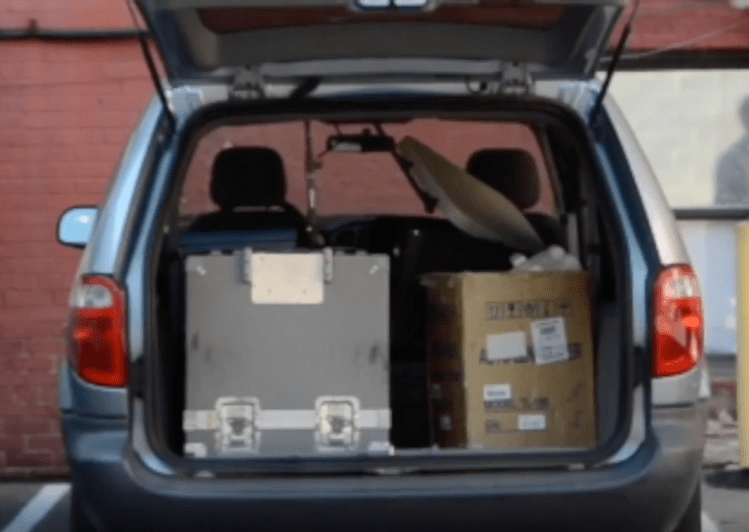
All of the equipment is brought to the clinic site in a van by the mission leader.
Student volunteers are responsible for unloading the van and setting up each piece of equipment.
Equipment to be set up:
- Visual acuity stations: phoropter stands and computer eye chart stands
- Tonopens, covers, and eye drops
- Autorefractor
- Lensometer
- Slit lamp
- Indirect ophthalmoscope
- Fundus camera
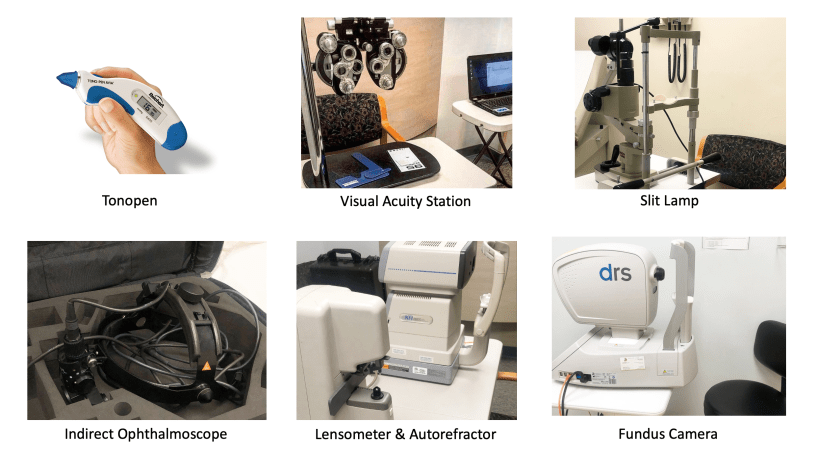
Eye Exam Flow
Medical student volunteers see patients in the order they arrive.
Volunteers receive a copy of the patient’s information as well as a blank chart to fill out throughout the encounter.
Students follow the appointment flow below.
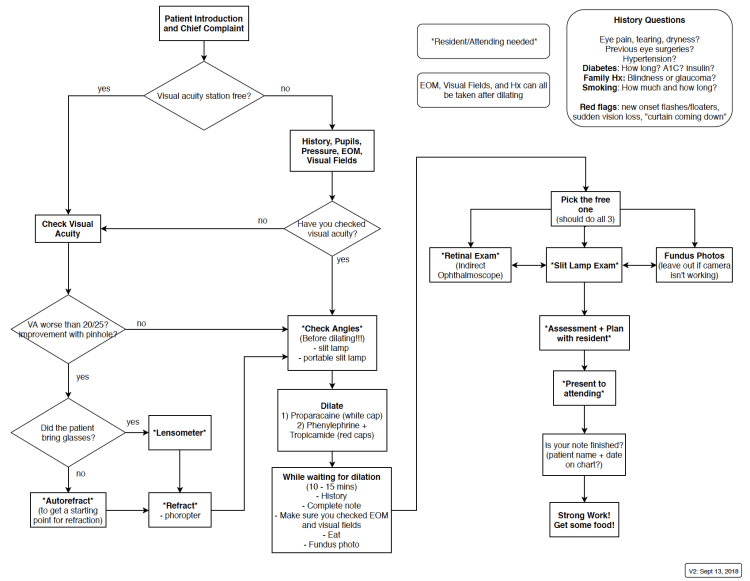
All of the above is conducted in a large room or hallway, where we have two eye charts and two phoropters (each spaced 10 ft. apart), and a few exam rooms, where we perform a slit lamp exam, indirect ophthalmoscopy, and obtain retina photos.
At the end of the patient encounter, student volunteers write up assessments and plans, staff the patients with the faculty preceptor, and discuss the plan with the patient.
When needed (~10-20% of patients), we refer patients for follow-up at UPMC, which is able to provide care for those without insurance. If the patient can benefit from a new pair of glasses (~20-30% of our patients), we write them a prescription based on our refraction exam. Patients can use the OneSight Voucher Program to obtain glasses.
Once one patient encounter is complete, students can check with the front desk to see if another patient is ready for an exam.
Clean Up
Once the final patient is seen, students pack up each piece of equipment and load it back into the van.
The faculty member at the mission usually summarizes the day’s findings and conducts a ~10 min teaching session before the students depart.
 PittMedGES