Interested in arranging a GES mission at your clinic?
Thank you for checking us out! We are dedicated to eliminating barriers to eye care for patients in the Western Pennsylvania area.
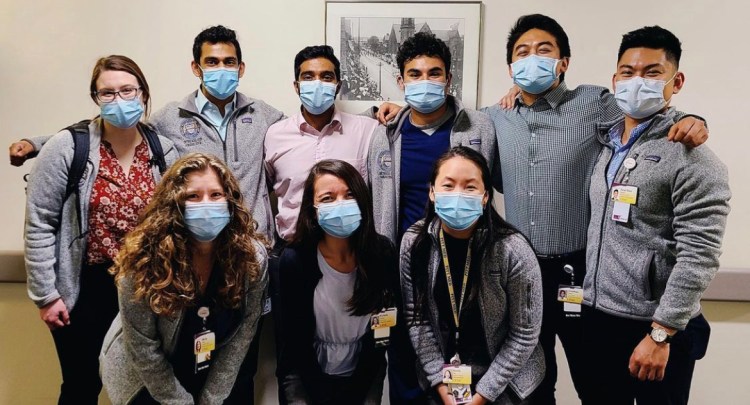
GES comprises students, residents, and faculty who come to your clinic site to provide comprehensive eye care for individuals who might otherwise go without.
Overview of GES Missions
We run 2-3 clinics each month (planned 6-8 weeks in advance) at several sites in Pittsburgh and the surrounding area, including:
- Birmingham Clinic in the South Side
- Squirrel Hill Health Center
- Several Primary Care Health Services sites (East End, Alma Illery, Braddock)
- Cornerstone Care (Greensboro and Waynesburg locations)
At these missions, we generally have 9-14 patients scheduled for weeknights, and 15-25 for Saturday missions. We find that we generally have a 15-30% no-show rate, and typically see 7-12 patients on weeknights, or 12-22 patients for Saturday missions.
For weeknight missions, we like to arrive at ~5:25 PM to set up our equipment, and start seeing patients at 6, wrapping up around 9. For Saturdays, we arrive ~8:25 AM to set up and see patients from 9 to around 1 or 1:30. At each mission, we have 6-7 medical student volunteers (with one leader and a co-leader), 2-3 ophthalmology residents, and 1 faculty preceptor.
When needed (10-20% of patients), we refer patients for follow-up through UPMC, which is able to provide care for those without insurance and/or connect patients with a Patient Navigator to provide support and resources.
Clinic Site Roles
As the clinic site, you would recruit, schedule, and confirm patients for appointments during the mission. Our organization can bring medical student interpreters when needed, and we ask that clinics let us know a few days advance if multiple patients speak a foreign language.
At our missions, we ask you to have two office staff members from the clinic present to check in patients, copy charts, provide vouchers for glasses, and arrange follow-up when necessary. Medical students see patients in the order they arrive, and many clinics help them out by providing a clipboard and a copy of this paper chart with the patient’s name and DoB. When available, clinics provide a summary of the patients’ medications, vitals, and important labs (e.g., hemoglobin A1C), as well as past GES charts.
If the patient can benefit from a new pair of glasses after the eye exam, the clinic can provide a letter of referral on official letterhead and containing the organization’s tax ID number so that the patient can use the OneSight Voucher Program to obtain glasses.
For patients requiring follow-up, we like to leave the mission with a photocopy of the chart with a contact phone number for scheduling.
Space Requirements
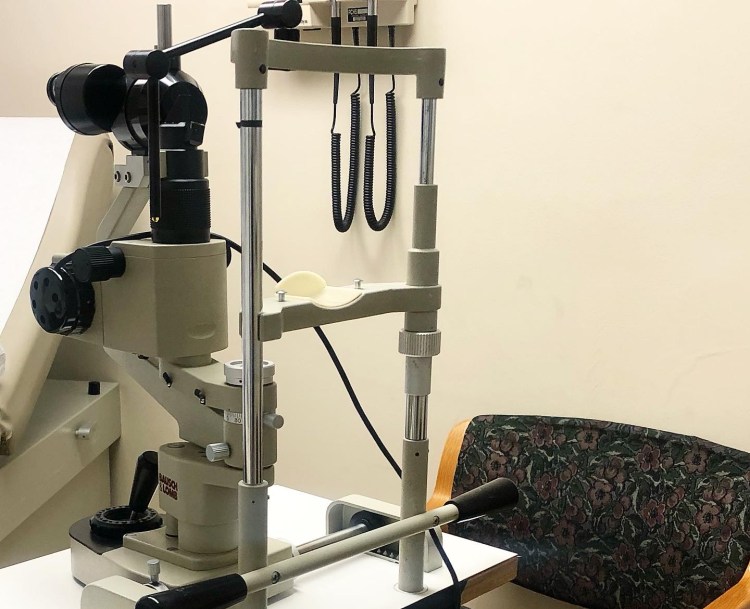
The eye exams generally require a conference room or large hallway, where we have two eye charts and two phoropters (each spaced 10 ft. apart), as well as 3 exam rooms, where we perform a slit lamp exam, indirect ophthalmoscopy, and (if possible) obtain retina photos.
When you contact us, we will set up a time to meet with you at the clinic site to ensure that we are able to arrange a mission in your clinic space.
Let’s work together.
If you are interested in having us arrange a mission at your clinic site, please contact us at: pittmedges@gmail.com
Thank you for your consideration, and we look forward to working with you!
– Guerrilla Eye Service
 PittMedGES